Episode Transcript
[00:00:00] Speaker A: In my book, I talk about different cases where physicians chose to fight and basically they won. There's a physician, Dr. Rajendra Bothra, in Detroit, who is a very prominent surgeon and a philanthropist, and he ran pain management practice. The government wanted close to $500 million from him. And they arrested him and they didn't let him. They didn't release him. They didn't release him. On pretrial release, he spent three and a half years in jail.
[00:00:32] Speaker B: That's great.
[00:00:33] Speaker A: And ultimately was found not guilty on 54 charges.
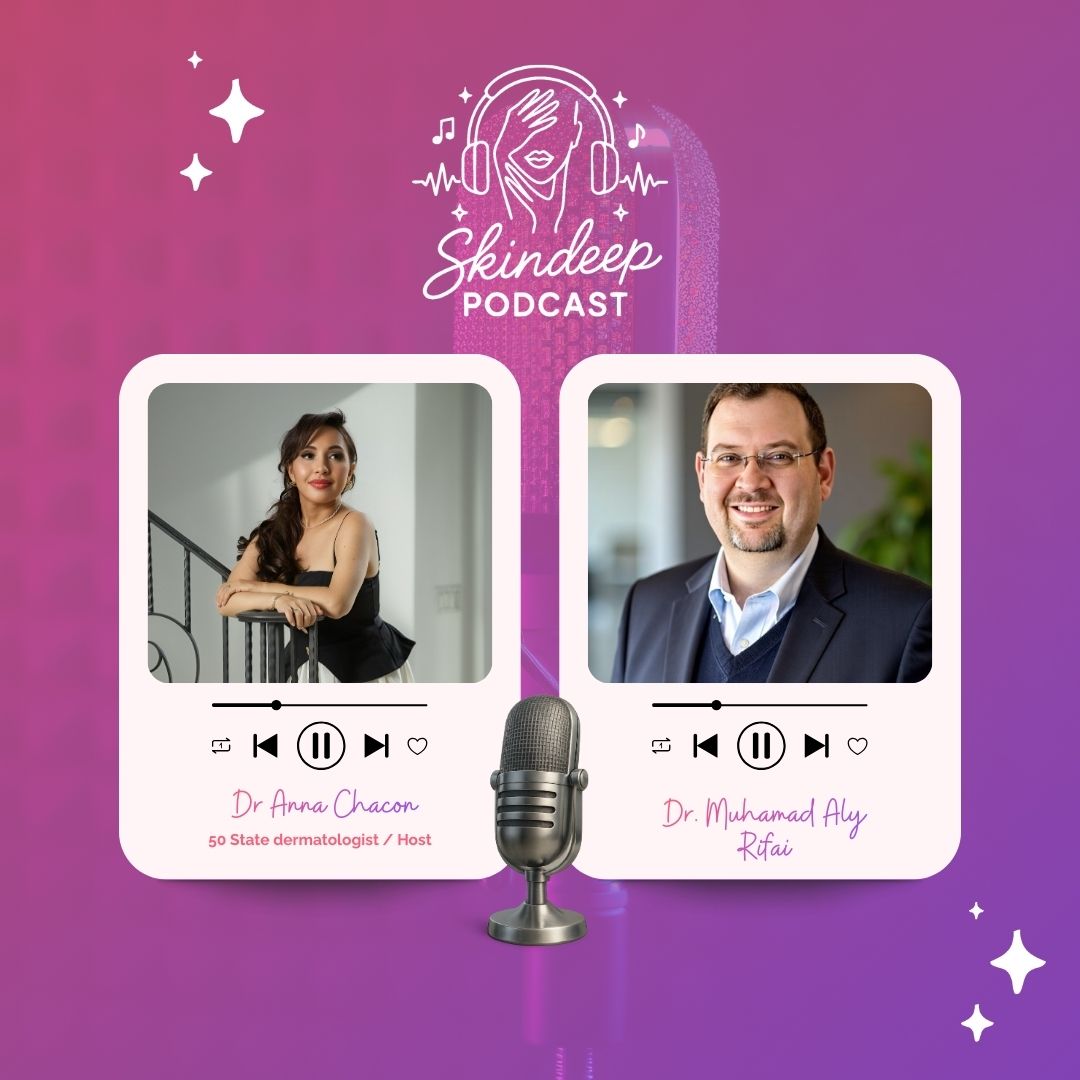
[00:00:38] Speaker B: Welcome to Skin Group. I'm Dr. Ana Chacon. And today we have a very special guest joining us. Get ready for some expert insights you won't want to miss.
[00:00:49] Speaker A: Hi, I'm Dr. Muhammad Ali Refai. I'm an internist and a psychiatrist by training.
And I'm also an addiction medicine specialist. I'm board certified in internal medicine, psychiatry and addiction medicine. And I've been in private practice for the last 15 years. Prior to that, I was actually at the National Institute of Mental Health in Bethesda, Maryland. And then I worked for a hospital system where we actually started the first emergency telehealth system in the Nation in 2006.
And since then I've been practicing the field of telehealth and telepsychiatry and been in private practice. And I'm very excited and glad to be talking to your audience.
[00:01:35] Speaker B: Thank you so much. I guess with your story, and I know you kind of become an expert on this area, what kind of led to, I guess, your case in the first place.
[00:01:48] Speaker A: So I wrote a book about my case. The title of the book is doctor Not Guilty. And actually last week it was number one bestseller on Amazon in mental health and in health law.
So I'm pretty excited about that. It's available on Amazon. Dr. Not Guilty is the title of my book. But basically it was my pioneering work in telehealth. Started doing telehealth in 2006 when it wasn't very. Nobody knew anything about telehealth. And basically we started the telehealth movement.
I saw people in emergency rooms. I saw people in nursing homes. And this was a pioneering work. And I actually wrote some of the early guidelines and the books about how to do telehealth. Covid happened in 2020 and everything was shut down. And basically what happened happened is that the government saw that telehealth services were being utilized by almost every physician in the country.
[00:02:53] Speaker B: Yeah.
[00:02:54] Speaker A: In 2017, the federal government initiated an investigation about me because they said that my billing Pattern was different. It was different. I was the only one of the few physicians that was doing telehealth, and that's what distinguished me from other physicians. And they called my billing behavior aberrant. And they initiated an investigation. Now, the investigation went nowhere because I basically did everything by the book. But then Covid happened, and the federal government basically went to sleep for about a couple of years because they didn't do anything because of COVID And then when they woke up in 2022, they dusted their papers and they found Dr. Refai had done telehealth work. And they wanted to teach physicians a lesson about doing everything the right way in telehealth. And basically they wanted to use my case as an example to teach physicians about telehealth. And I was charged with healthcare fraud for my telehealth services, which were impeccable, which were done by the book, which were well documented.
And I decided that I did nothing wrong and I wanted to go to trial. So an indictment came in November 2022.
And basically what happened is that I decided that I wanted to go to trial because I didn't do anything wrong.
And subsequently I hired an attorney who was actually special, who specialized in healthcare and who's actually brother is a psychiatrist.
And basically what happened is that we went to trial in May 2024. The trial was about five days. On the sixth day, the jury met, and it took him two hours to come back and pronounce a not guilty on all charges verdict.
[00:04:50] Speaker B: Wow.
[00:04:51] Speaker A: So basically, it was. It was just that the government had choices that they just wanted to.
To teach a lesson about the topic of telehealth. And basically the expectation from the government that anybody who gets indicted ends up pleading. Only about 1% of defendants go to trial. And they did not expect that I was going to go to trial. And their expectation was that I was going to plea, that I was going to just agree with the government version. But I knew that everything I did was right.
I knew that everything that I did was lawful and that I was with telehealth from the beginning.
[00:05:31] Speaker B: Wow. Yeah, that. That sounds. I mean, very few people went, so that's very impressive. And then I'm sure is everyone offered a plea. A plea agreement is.
[00:05:43] Speaker A: Pretty much everybody's offered a plea agreement. I mean, and my lawyer, every time my lawyer would say, the government is asking, are you going to plea? The government is asking, are you going to plea? Are you going to go to trial? If you go to trial, they're going to throw everything at you they're going to try as hard as they can if you go to trial. And so I said, no, I want to go to trial. I want, I did nothing wrong. I want to tell my story to the jury. And I actually ended up not testifying in my own trial because the evidence was so damning.
I only presented two witnesses. I presented an expert coder and a psychiatrist who just spoke to the fact that what I did was bread and butter. Psychiatry was nothing magical, nothing different.
It was what everybody was doing and it was lawful, it was correct. It wasn't even overcoded or up coded. It was just straightforward. The government just said these services were not provided. And we showed that the services were provided. The coder showed that the services were provided.
An expert psychiatrist showed that the services were provided. And the jury didn't believe the government's version.
[00:06:55] Speaker B: What initially happens, how are you notified of this? Did you even see this coming? Do you get an email?
Do these people just storm into your office? What are kind of the first steps when you are facing this situation?
[00:07:10] Speaker A: In my case, this started in 2017.
So the Medicare, the Center for Medicare Services and a contractor called Safeguard Services that does auditing services for Medicare basically asked for an audit, an audit of our records, specifically to tell telehealth records.
And I complied. I submitted everything to Medicare. I saw at that time that this was very, very serious.
So I hired an attorney to represent me. This is as early as 2017, an attorney represented me. We hired an expert coder who basically reviewed the entire records that we submitted to Medicare. We submitted the records in 2017 and then nothing happened. For about two years, nothing happened. And then in 2019, the OIG, the Office of Inspector General for Department of Health and Human Services actually came to my office and did a search warrant and they obtained additional records and then they went away for another two years. This was during the COVID pandemic. Actually, they went away for another three years during the COVID pandemic. And then Nothing happened until 2022, where they said the records that you submitted in 2017 were all fraudulent. The records that we obtained in 2019 were all fraudulent. And we're going to indict you. And so I said, that's fine. Well, let's, let's look at these records. When, when you submit an indictment. Let's take a look at these records. So when the indictment came in November 2022, we got the evidence and I had a coder who went through all the records that they had, claimed that the records were not compliant. And my coder discovered that the audit that they did in 2017, that the results was reported to the Department of Justice that this audit was incorrect. It was all fabricated. And on the stand in my trial, my attorney questioned and cross examined the government expert, the expert coder that the government presented to the jury to tell them that all my work was fraudulent. And on the stand and on questioning, cross examination, ultimately, the government's expert says she does not endorse the audit and she did not support the government's case, nor the government's investigation. This is on the stand. This is the government's expert. So they had no expectation that this was going to go to trial.
Everything was just the government's version. Whatever they wanted, they just wrote in the indictment.
Coders did not support their allegations.
The coders did not support the government's version of what they said happened, which is basically, we built for services that never happened or we upcoded. And basically their own expert just disavowed the government's case. And that was enough for the jury to say, well, enough of this. Because if the government's own expert says this case is not supported, there's nothing here to, to hear about any guilt or anything like that.
[00:10:21] Speaker B: Yeah, that's just crazy. And then did you document electronically or what exactly did they.
[00:10:27] Speaker A: So at that time, actually some of, some of our notes were paper documentation because they were actually as far back as 2014 and 2015, the notes that actually the indictment was on. Even though the trial happened in2024, the service was the. Was provided in 2017.
So they were looking. We were in court in 2017. I'm sorry, in 2024, talking about services that happened in 2017.
This is how, how ridiculous this is seven years earlier. We had paper documentation at that time, but we later on transitioned to an electronic medical record, which also helped us because they looked at everything. So even though they, the indictment came in 2022, they looked at 10 years worth of records and practice. Whenever they do something like this, they just look at all your practice, it doesn't matter. And they nitpick at everything.
And every, every small thing just becomes the crime of the century.
[00:11:27] Speaker B: That's just crazy. And I'm sure, you know, they can find stuff. So the fact that they didn't find anything is, is just really impressive. Is it true that your bank account gets locked up when you're.
And it just.
[00:11:40] Speaker A: In some cases, yes. Yeah, in some cases. And in my case, they were very, very unsure of the charges.
But for example, in my case, it was just a straight health care fraud case. And so basically I just said that this is. This is just straight health care fraud. And so nothing. Nothing got reported.
But I found out during the trial and during discovery that basically they have access to my entire bank accounts and every. Every little details about all my financial life. The government got access to that secretly with the search warrants from the. From the. From basically from all the banks. So basically, they. They just have everything. They had everything. And they looked at my tax returns.
Unbeknownst to me, they actually prompted the IRS to audit my tax returns. I got audited four years in a row, 2016 through 2020.
They audited me four years in a row, and they found nothing.
So if they hadn't found anything, they would have brought it in trial. They found nothing after four years of audits.
We had an impeccable tax return. So.
So that when. Whenever they put somebody in the crosshairs, they look at every aspect in your life. Your tax returns, what car you drive, where you travel. They looked at my travel. They. They wanted to look to see whether I build any services while I was traveling, even though I only traveled outside the country four times in seven years.
They looked at that. They looked at. They. They looked at every time where I traveled, from where to where, and what services were being billed when I was out of the country.
[00:13:24] Speaker B: That's just so crazy. How do you even win against these people? That's just nuts.
[00:13:29] Speaker A: Basically. Doing everything. Everything the right way, I think is the way to go. And in my book, I talk about different cases where physicians chose to fight, and basically they won. There's a physician, Dr. Rajendra Bathra in Detroit, who is a very prominent surgeon and a philanthropist, and he ran pain management practice. The government wanted close to $500 million from him, and they arrested him, and they didn't let him. They didn't release him. They didn't release him on pretrial release. He spent three and a half years in jail.
[00:14:10] Speaker B: That's great.
[00:14:11] Speaker A: And ultimately was found not guilty on 54 charges. 54 charges. He was found not guilty. Wow. So after. After being in jail for three and a half years.
So. So it's. It's. It's hard. You know, some. Some of. Sometimes it's just the system is unfair. And they said, oh, he's gonna. He's gonna abscond. He's gonna run away to India. Because he's of Indian ancestry, he's gonna run away to India.
Judge, you shouldn't release him. From jail. You should keep him in jail. And then he was. He was found not guilty and he wrote a book. He also has a book out, it's called USA Viraj. And he's going to have a movie coming out.
So basically physicians are fighting back. We're talking about it and we're telling other physicians about it.
There is actually another case that actually is reaching the Supreme Court by a. It's a. It's another physician who was prosecuted during COVID time. Dr. Ron Altenbein, whose case now is on petition to the Supreme Court to hear the case.
They accused him of upcoding. He actually saw patients during the COVID pandemic.
And they did COVID testing and they evaluated these patients. The government said that Dr. Alfenbein and his practice should have coded these cases as simple cases, as level 299212.
He said these cases were complex. Some of them may have had Covid or could have had Covid. So he coded them as 99214. The government says that was fraudulent. And so they presented to the jury that Dr. Alphenbein whole services were fraudulent. He went to trial and the jury actually found him guilty. Now the judge who was in the trial said, I don't know how the jury found him guilty because the government couldn't have proven that he was guilty. The government just, just basically hoodwinked the jury. So he put in a motion and says, I declare him not guilty. He overrode the jury. The government appealed the judge's order to the United States Court of appeal for the Fourth Circuit, and the Fourth Circuit court reversed the judge's order.
So now Dr. Alfenbein has decided to appeal it to the United States Supreme Court.
And it is now in the Supreme Court whether the government can just make things up. Whether the government's opinion about physician services is what, what is right versus the physicians clinical judgment and clinical judgment and basically decision about what to code for services.
So we have a case in the United States Supreme Court. I hope that they're going to take it. They haven't decided whether to take it on cert, which is basically their decision to take a case for discussion. But basically we need to fight back and take it to the Supreme Court because basically just the government is just going to make decisions that our work is fraudulent and they may basically target specific physicians, minority physicians, and sometimes that's unfair and unjust prosecution of physicians.
[00:17:26] Speaker B: Yeah, no, I totally agree. How did you manage the immediate impact on your practice, Patients. Patients and your reputation As a physician,
[00:17:34] Speaker A: my patients know who I am and know the services that I was providing. In fact, the government could not find one patient to testify against me. They had zero patients to testify against me. They had threatened my staff who worked for me. And some of them on the stand says Dr. Rafai did nothing wrong. After the government threatened them with everything on the stand, they said that I did nothing wrong and they could not find, I had 20,000 patients and they over, over 10, 20 years, they could not find one patient to step on the stand and say, well, Dr. Refai built this service for me. He never did that. They searched and searched and searched and never found one patient. But the problem is these government cases, they're like a train. They can't stop. They're going from station A to station B and to station C. And their purpose is incarceration and conviction for the physician.
[00:18:37] Speaker B: Yeah.
[00:18:38] Speaker A: So. And the train doesn't stop. So if they can't find patients, they'll kind of bring up alternative theories. And so you just have to basically stand tall and be proud of yourself. There was a press release from the United States Department of Justice. The press release is still out there. By legal action. We forced them to put a, an amendment to the, to the, to the press release that I went to trial and was found not guilty by a jury. But the press release is still there. Lehigh psychiatrist stole from Medicare. It's still out there, but I'm lucky because I also worked with newspapers and news outlets. So next to that press release there is jury found psychiatrist not guilty and disapproved of the government's case.
So basically playing the media game is also fair game for physicians. And we've seen that some physicians, for example, have played the media game and they were successful. There's a physician by the name of Dr. Etan Heim in Texas who actually was indicted by the federal government on HIPAA violation because he was a whistleblower against a Texas hospital who was basically administering treatments to younger individuals, gender affirming care after they had promised that they were not going to do that. So he was a whistleblower and they indicted him for criminal HIPAA violations. He went up, he went on X, he had a LinkedIn page, he had a Facebook page and he just spoke publicly about his case all and alerted politicians and ultimately the Justice Department dropped the case against him.
[00:20:24] Speaker B: That's just so crazy. How can the medical profession or just our field better support these doctors who are facing these challenges under investigation through the federal government, thrown in jail and also how Hard is it to go after these people? I mean, you deserve every. You have every right to go after them after what they did to you. I mean, they almost ruined your life.
[00:20:46] Speaker A: It's very hard. I mean, there is no recourse. I have very little recourse. I am currently in a legal battle with the United States Department of Justice. Actually, my motion was denied.
I had submitted a motion to impose sanctions on the prosecutors that prosecuted me and to recover attorney fees and expenses for this prosecution. The judge has denied the motion. We are in appeal, and our appeal is actually at the United States Court of Appeal for the Third Circuit. And it's going to be heard. And I anticipate that it may actually reach the United States Supreme Court. So fight, fight, fight back all the time. I think professional organizations are also starting to turn around. So the American Medical association, in the case of Dr. Eltenbein, actually submitted an amicus brief for the appeals court and is submitting an amicus brief to the Supreme Court telling the court that the government can't be utilizing the CPT coding, the current procedural terminology by the American Medical association to prosecute physicians, that there is legitimate disagreements on whether a note is a level three or a level four, that this agreement is never criminal, and that the American Medical association does not support any criminal prosecutions of physicians over disagreements on billing decisions. Whether a note is a level three or level four is not a crime, is a disagreement. And a horus is an administrative matter. And if the government disagrees with that, should bring in administrative proceedings and should do education and should bring coders to tell your coders why a note is a level three versus a level four. But that is never a fraud or a crime. And the American Medical association is in support of that. So I see that our professional organization are stepping up to supporting us. And so I applaud them for that. And we're going to continue to fight.
I'm going to continue to fight for physicians. That's why I wrote my book, Dr. Not Guilty. I also have a service that is available for any individual who's facing legal issues, whether it's board hearings, whether it's criminal prosecution, whether it's administrative hearings. And I provide support.
I provide resources. I will provide them with counseling. If they're experiencing issues, they should go to my website. It's www.shield.expert s h I e l d expert. Shield that expert. They can contact me. And I'm happy to provide them support. I'm happy to provide them resources. They can also read my book Dr. Not Guilty.com or purchase it on Amazon. It's a number one bestseller during the month of November.
[00:23:52] Speaker B: Well, thank you so much, Dr. Faith.
[00:23:55] Speaker A: My pleasure, Sam.